

12 Health Benefits of Being by the Sea
There is real science behind why being by the sea makes us feel better… your body is not just at rest, it is undergoing a multi-system recalibration. Let us break it down for you.
From a neuroscientific and physiological perspective, coastal environments act as powerful regulators on brain function, nervous system balance, hormone regulation, respiratory function and overall health.
What makes the sea unique is not one single factor, but the combination of rhythmic wave patterns, mineral-rich air, expansive horizons and natural light exposure. Together, these create conditions that help the body shift away from stress-driven states and toward restoration and regulation.
Whether you are walking along the endless sands of a Norfolk beach or standing above the Atlantic cliffs in Pembrokeshire, these biological processes kick-in to action.
1. Wave Rhythms and Brainwave Activity

Rhythmic wave patterns produce low-frequency, predictable acoustic patterns. The brain responds to this through a process known as neural entrainment, where external rhythms influence internal brainwave activity.
In everyday environments, the brain is dominated by beta waves, associated with active thinking and stress. By contrast, the natural cadence of the sea shifts you from anxious beta to calm alpha and theta wave activity, linked to relaxed focus and mental clarity.
This is why time spent on beaches with breaking waves, lead to a noticeable slowing of thought and a calmer mental state. Think Atlantic surf beaches like those on Perranporth in Cornwall, Croyde in North Devon or Rhossili Bay on the Gower Peninsula, Wales.
2. Rebalancing the Autonomic Nervous System
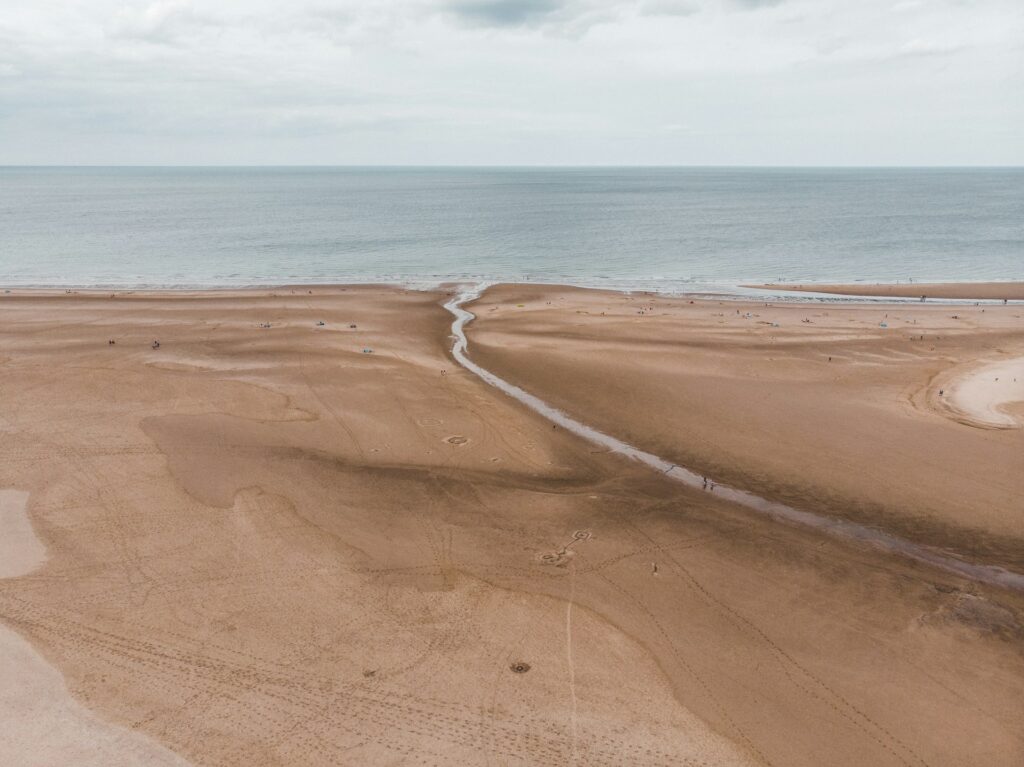
The autonomic nervous system controls unconscious functions such as heart rate and breathing. It operates between two states, Sympathetic (stress response) and Parasympathetic (recovery and restoration) via the famous Vagus Nerve.
Coastal environments with broad, expansive beaches promote parasympathetic activation. The result is a measurable shift in physiology, like a lower heart rate, reduced blood pressure and decreased muscle tension.
Wide, open seascapes reduce sensory threat signals, while the steady rhythm of the sea helps regulate breathing patterns. So expansive shores like Bamburgh Beach in Northumberland, Holkham Beach in Norfolk, Rhossili Bay in Wales or Minehead in Somerset would provide the perfect therapy for rebalancing the nervous system.
3. Cortisol Reduction and Stress Regulation
Cortisol is the body’s primary stress hormone. While essential in short bursts, chronically elevated cortisol is linked to fatigue, poor sleep and inflammation.
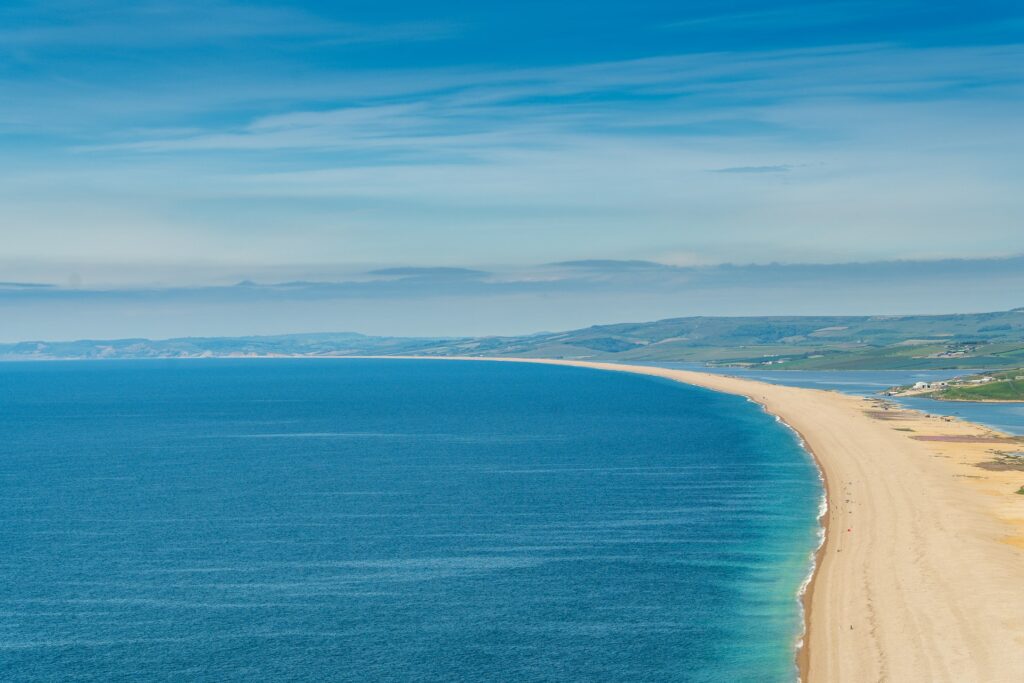
Studies of coastal “blue space” exposure show reductions in cortisol after time spent by the sea. Walking along tranquil coastlines like those of Robin Hoods Bay in Yorkshire, or the even quieter stretches of coastline like Aldeburgh Beach in Suffolk or Chesil Beach in Dorset can lead to a real decrease in physiological stress load.
This supports improved immune function and emotional stability.
4. Cognitive Restoration and Mental Clarity
The sea supports mental recovery through a concept known as Attention Restoration Theory (ART). Urban environments require sustained, effortful attention. By contrast, the sea provides ‘soft fascination’, as in stimuli that engage the brain without demanding effort.
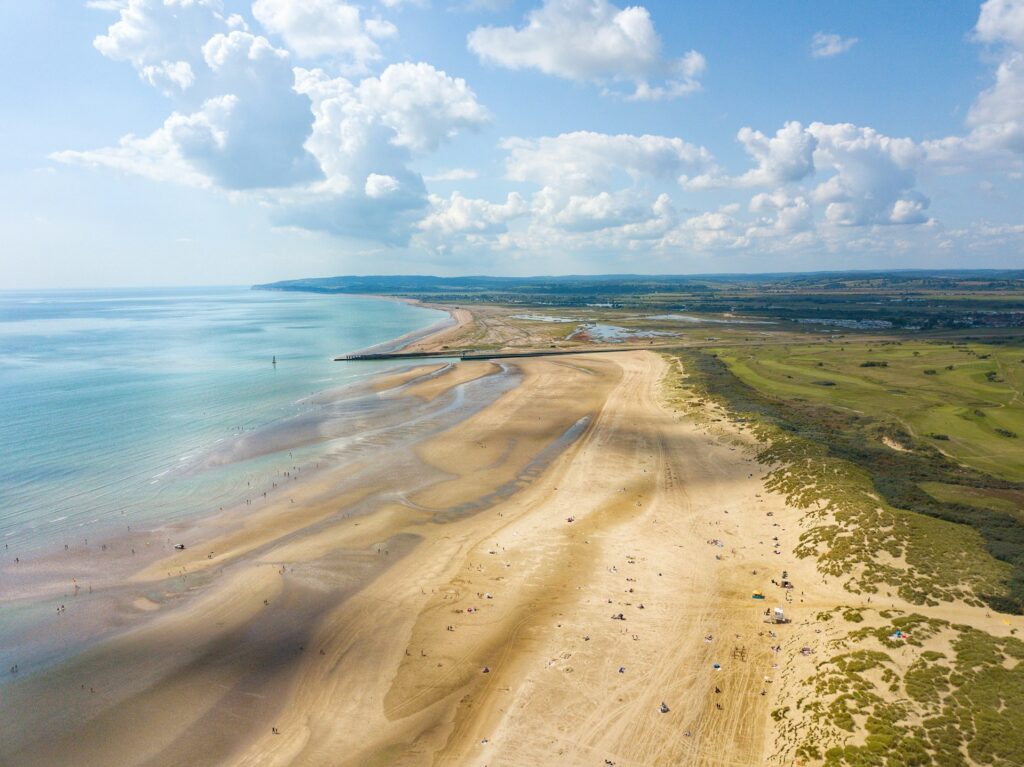
This is a kind of meditation and allows the brain’s attentional systems to reset improving focus, working memory and cognitive efficiency. For example watching tidal movement shift across sand banks. Imagine this in stunning places like St Ives Bay, or on the endless wide flats of Brean Beach in Somerset or across picturesque Camber Sands Beach in East Sussex.
5. Neurochemical Effects of Coastal Air

Breaking waves generate negative air ions, which are molecules that influence brain chemistry. These ions positively interact with serotonin regulation, a key neurotransmitter involved in moods and focus. This may explain the commonly reported uplift in mood and alertness experienced at the coast.
Higher concentrations are found in areas with strong wave activity and there is always a beach within reach with wave action. For example those in the South West could head to the surf beaches of Dorset, or the Atlantic beaches of North Devon and North Cornwall. Or even the surfing beaches of Pembrokeshire and the Gower Peninsula. On the North East side of the isles there are the beaches of Northumberland and Yorkshire, like Saltburn-on-Sea or Druridge Bay.
6. Marine Aerosols and Respiratory Health

Sea air contains microscopic salt particles (marine aerosols) released by wave and wind action. When inhaled, these particles improve airway hydration, support mucus clearance and reduce inflammation. They sell sea salt aerosols in pharmacies for a small fortune, yet nature’s version is way more effective! And if you rinse your nasal cavities with sea water you can take it a step further.
Exposed coastal locations such as Durdle Door Beach on the Jurassic Coast or Chesil Beach tend to have higher concentrations of these aerosols, contributing to the feeling of easier, deeper breathing.
7. Circadian Rhythm and Sleep Regulation

Coastal environments provide strong exposure to natural daylight due to double light refraction over the water. This quality of light significantly helps improve the regulation of the body’s circadian rhythm via the brain’s internal clock, which supports correct timing of melatonin release, improved sleep onset and deeper, more restorative sleep cycles. So the more high quality light exposure throughout the day the better.
Wouldn’t a day, or a weekend, or a week spent on the open coastal horizons be a wonderful way to effortlessly reset your circadian rhythm? So you can take your loved ones to a great big beach where they will tire themselves out, like Westward Ho! or Woolacombe Beach in North Devon, whilst your sleep cycle resets.
8. Biomechanical Benefits of Walking on Sand

It’s so obvious when you say it out loud, but walking on sand introduces surface instability, increasing the demand on muscles and joints. So beaches with really soft, sinking sand (which make you work harder) actually provide optimum conditions for this type of movement. The body responds by engaging stabilising muscles, improving balance, joint strength and neuromuscular coordination.
This form of low-impact exercise is both effective and accessible because us Brits are lucky enough to never be further than a single journey to a beach. Sandy beaches with dunes such as Filey Bay in Yorkshire, Embleton Beach in Northumberland, Saunton Sands in Devon or Watchet Beach in Somerset would be ideal.
9. Cold Water Exposure and Circulation

Contact with cold seawater activates the body’s acute stress response, followed by a compensatory recovery phase. This leads to increased circulation, the release of endorphins and again, reduced inflammation.
A short swim or paddle at any beach or harbour in the British Isles can produce an immediate sense of alertness followed by calm, reflecting this physiological cycle. Yes, any where from Alnmouth Beach in Northumberland to Teignmouth Beach in Devon, there is no excuse not to visit one of the many family friendly beaches in the UK to experience all these benefits.
10. Sensory Regulation and Reduced Overload

The brain filters thousands of thoughts and processes vast amounts of sensory input daily, much of it fragmented and artificial. The coastal environment simplifies this input and soothes with continuous wave sound, broad, uncluttered visual fields and predictable natural patterns.
You can literally reduce your brain’s sensory load by simply walking along any part of the England Coast Path, allowing your brain to regulate more efficiently and reduce cognitive fatigue.
There is no excuse, the England Coast Path, and its equivalents, run all the way round the British Isles, so wherever you live you’re never far from some part of this path, be it the South West Coast Path in Cornwall or Devon, the Wales Coast Path, or the Northumberland Coast Path. In addition to the health benefits of being by the sea, you’ll also get the chance to enjoy watching local wildlife like bird watching along the cliffs at Flamborough Head in Yorkshire or spotting seals and Dolphins along the coast of Pembrokeshire.
11. Perspective and Emotional Processing

The visual scale of the sea or ocean influences how the brain processes emotion. Looking across an uninterrupted horizon, be it at Land’s End or along the Scottish coast at St Abb’s Head, you can reduce activity in brain regions associated with rumination. This leads to reduced stress perception, improved emotional balance and a greater sense of perspective.
So, instead of calling your therapist or psychologist, plan a trip to the coast! Immerse yourself in coastal elements and just breathe. Or even better, oraganise a seaside escape and give yourself a week to just be by the sea. Somewhere spacious and awesome like Durdle Door in Dorset, Kynance Cove in Cornwall, Cemaes Bay on the Isle of Anglesey or Luskentyre Beach on the Isle of Harris, Scotland.
12. Grounding and Electrical Balance

Walking barefoot on wet sand, referred to as “grounding” or “earthing”, offers physiological benefits through direct contact with the Earth’s surface. Wet sand is particularly conductive due to its saltwater content, allowing for the transfer of free electrons from the earth into the body.
These electrons neutralise positively charged free radicals and research suggests grounding supports reduced inflammation, improved sleep, and stabilisation of the body’s electrical state, as the human body itself operates through bioelectrical signals. At the very least, walking barefoot on the shoreline engages nerve endings in the feet, enhances proprioception (the body’s subconscious way of sensing its own movement, position and force in space), and deepens the sensory connection to the coastal environment, adding another layer to the restorative experience of being by the sea.
Any beach can do this for you, from the shores of the Isle of Wight to those of the Isle of Skye.
The Spa of Life
The health benefits of being by the sea are not abstract, they are rooted in scientifically measured interactions between the seaside and the human body. And, they are not the result of a single factor, but of multiple systems working in concert. No app, no supplement, no technique does all four of these at once – only the sea.
It influences brainwave activity, nervous system balance, hormonal regulation, respiratory function and cognitive performance. Few environments engage the human body so comprehensively. So, what feels like relaxation is, in fact, a measurable shift toward physiological balance, a return to conditions under which the body and mind function most effectively.
Which is why time by the sea does not simply feel good. It is literally the Spa of Life. So, what are you waiting for? Go and stand in it. Bare feet. Breathe. Listen. Look out as far as you can see. It’s totally free, in every sense of the word.